Planning Learning Effectively
Topic outline
-
Welcome to our micro-learning course on Planning Learning Effectively, designed to support teachers across Scotland in delivering effective and impactful lessons. Drawing from a range of educational resources, research, and national guidance, this audiobook offers practical tools and insights into planning, delivering, and improving learning in your classroom. The goal is to help you create an engaging, purposeful learning environment that not only meets academic goals but also supports the broader development of students.
-
-
1. Listen to the following audio clip and view John Hattie's short video.
2. Watch the presentation on Learning Intentions and Success Criteria. There are practical tips for creating these below. Then try Activity 1.
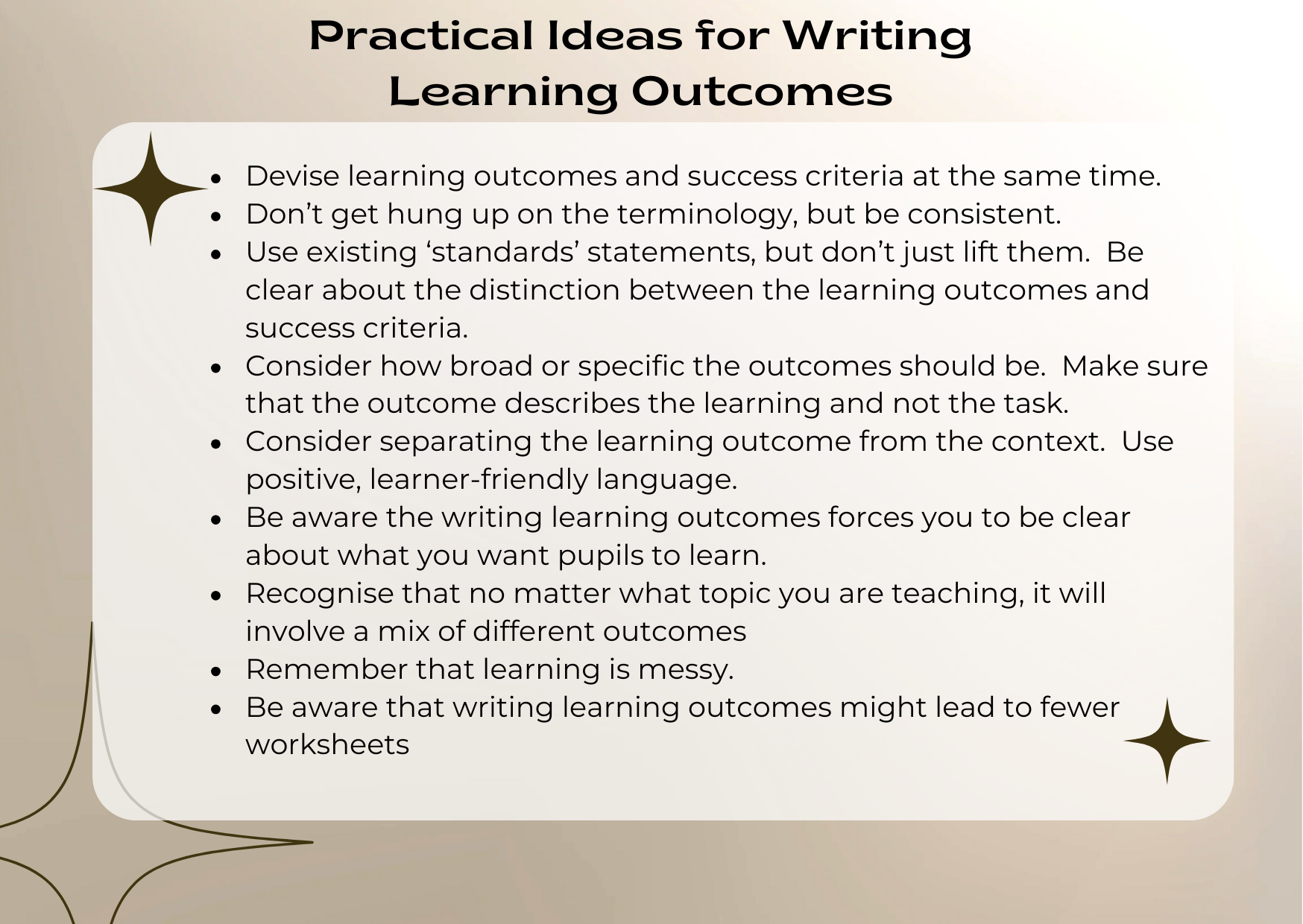
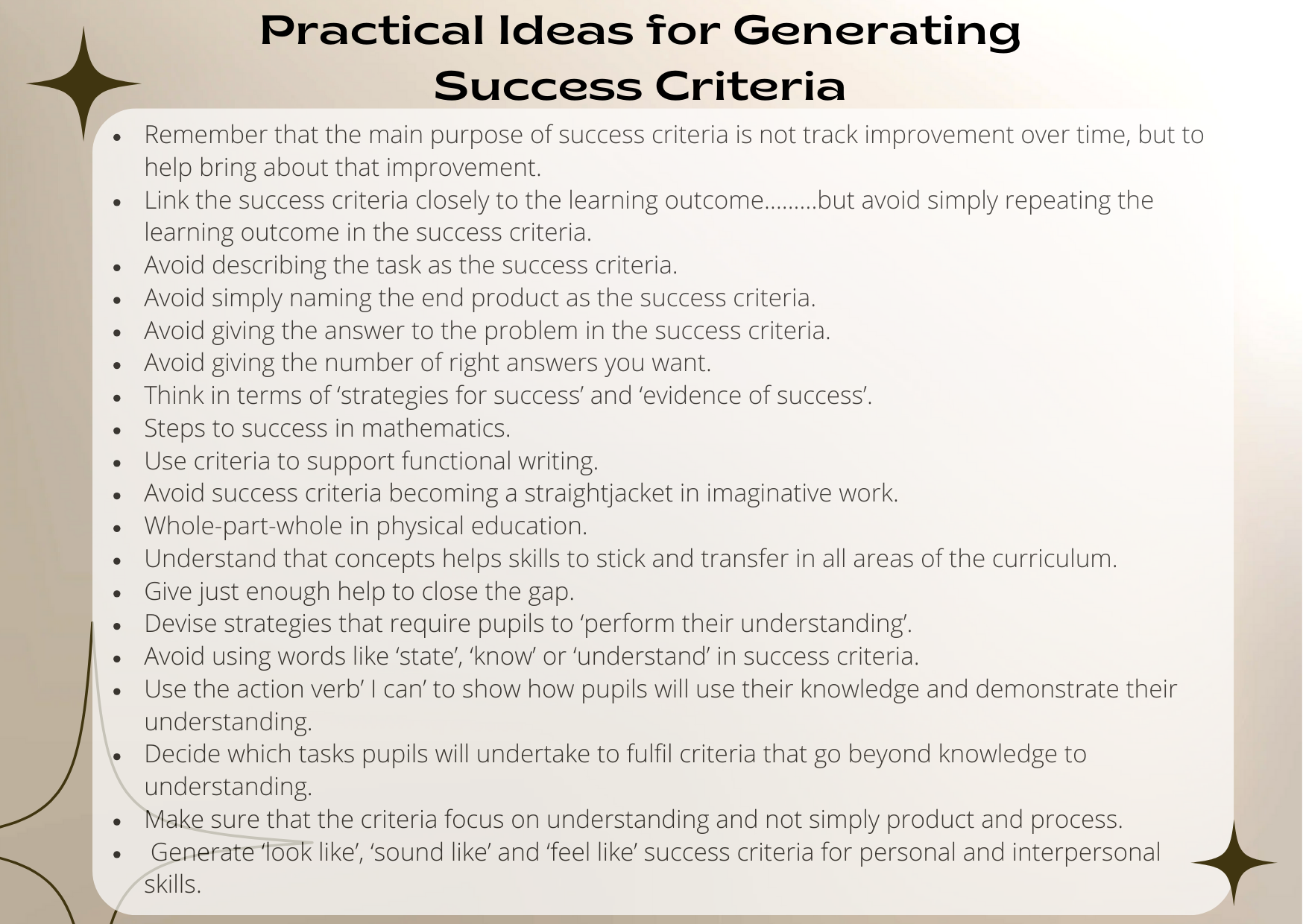
Links to the resources are available on the FVWL Learning Teaching and Assessment Thinglink
-
Activity 1: Creating Learning Intentions and Success Criteria
In this activity, you will:
1. Choose a topic you are planning to teach.
2. Write a clear Learning Intention for the lesson (e.g., “Students will understand the process of photosynthesis”).
3. Develop 2-3 Success Criteria that reflect how students will demonstrate their understanding (e.g., “Students can label and describe the stages of photosynthesis in a diagram”).
-
-
-
Listen to this audio clip which discusses engaging pupils in learning.
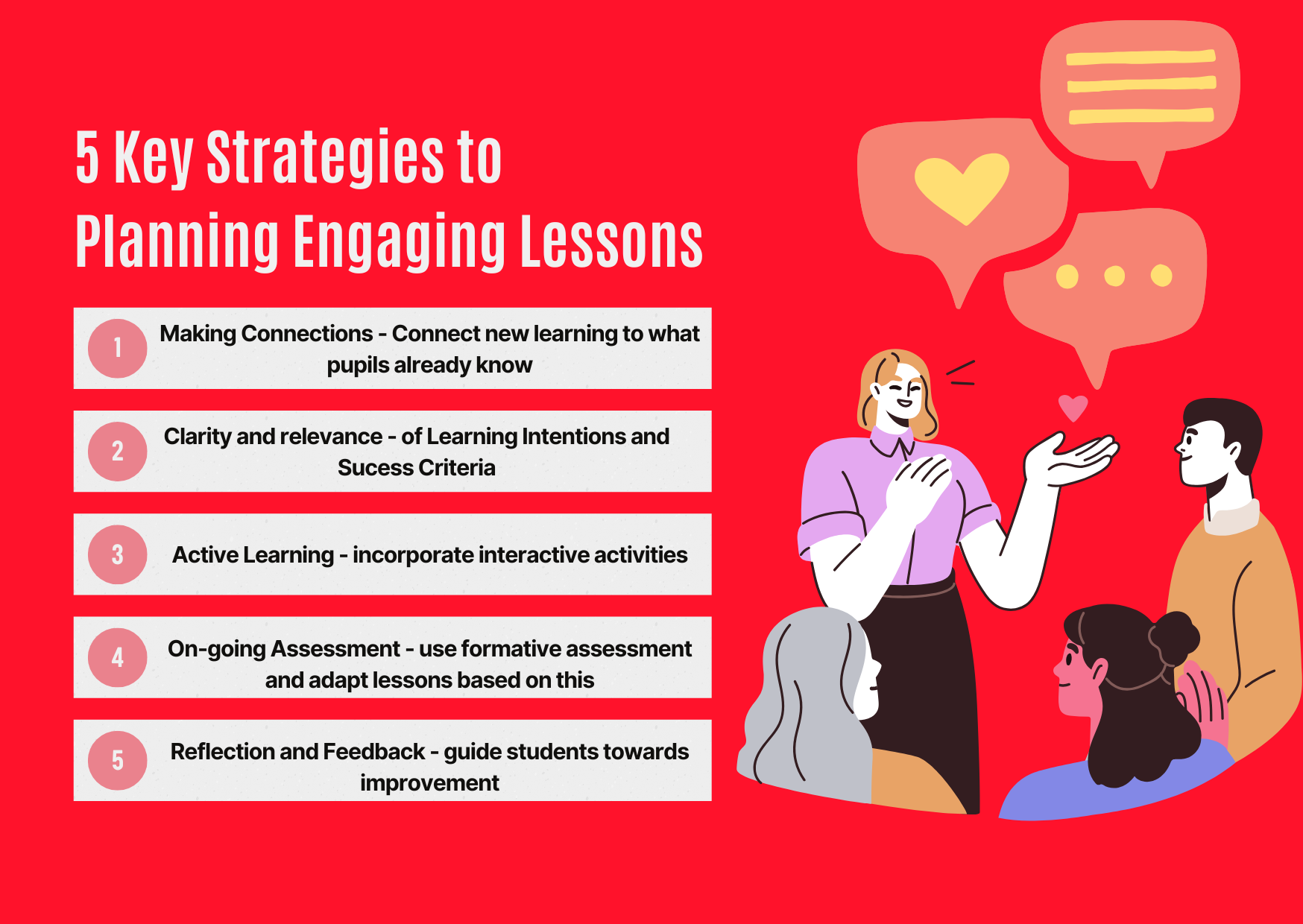
Taken from the Sec Ed – Engaging Pupils, Well-Planned Lessons: Five Keys to Learning.
You may wish to link to our other micro learning courses on relevant areas discussed here.
Micro Learning on Effective Learning Strategies
Micro Learning on Effective Questioning
-
Activity 2: Reflecting on Teaching Practices
Reflect on your current teaching practices. How effectively do you:
- Connect new learning to student prior knowledge?
- Ensure learning intentions and success criteria are clear and meaningful to students?
- Incorporate active learning strategies?
- Check for student understanding throughout lessons?
- Provide timely and effective feedback?
- Address national priorities like literacy, numeracy, and equity in your lessons?
Identify 1-2 key areas for improvement. Develop a specific and measurable action plan for one of these areas. Share your reflections and plan with a colleague for feedback.
-
-
-
Links to the resources are available on the FVWL Learning Teaching and Assessment Thinglink
1. Education Scotland – Refocussing on CfE
2. Learning Intentions and Success Criteria – Reminder Document
3. Effective Learning and Teaching and Planning LI/SC CLPL Presentation
4. Handouts for CLPL Presentation
5. Sample Ground Rules for Teacher Learning Communities (TLC)
6. HGIOS 4 (How Good Is Our School?)
7. Education Scotland – Moderation Cycle Poster
8. Sec Ed – Engaging Pupils, Well-Planned Lessons: Five Keys to Learning
-
-
-
Knowledge check for the mico module on Planning Learning Effectively.
Complete the 10 multiple choice questions based on the content of this course.
-
-

-
Planning Learning Effectively in the Scottish Curriculum
Effective lesson planning is crucial for ensuring that all learners have the opportunity to achieve their full potential within the Scottish Curriculum. You may wish to access our Inspirational Pedagogy Assistant to support your planning process at this stage. Here are some ideas for professional inquiry focused on effective planning and teaching strategies:
1. Understanding Learners' Needs
- Assessment and Analysis: Explore different assessment strategies to identify learners' strengths, weaknesses, and learning styles. Utilise resources like the Education Scotland document on Refocussing on CfE to inform your approach to assessment and data analysis.
- Learning Intentions and Success Criteria (LI/SC): Develop clear Learning Intentions and Success Criteria for lessons. Refer to the Learning Intentions and Success Criteria Reminder Document for guidance on crafting effective statements.
- Universal Design for Learning (UDL): Investigate UDL principles and their application within the Scottish Curriculum to create inclusive learning environments that cater to diverse learning needs.
2. Adapting Learning Experiences
- Flexible Grouping: Experiment with various grouping strategies, such as heterogeneous, homogeneous, and individual work, to address different learning needs effectively.
- Tiered Activities: Create tiered assignments that provide varying levels of challenge, accommodating learners at different levels of understanding. Use insights from the Effective Learning and Teaching and Planning LI/SC CLPL Presentation to guide your planning.
- Choice-Based Learning: Offer learners choices in their learning activities to foster engagement and motivation, enhancing their ownership of the learning process.
3. Supporting All Learners
- Additional Support Needs (ASN): Explore strategies for supporting learners with ASN, ensuring appropriate accommodations and modifications are in place. The Moderation Hub can provide further insights into best practices.
- Gifted and Talented Learners: Develop strategies to challenge and extend gifted and talented learners, ensuring they are appropriately supported and engaged.
- English as an Additional Language (EAL): Investigate effective approaches for supporting EAL learners, including the provision of language support and culturally relevant materials.
4. Effective Planning Practices
- Teacher Collaboration: Collaborate with colleagues to share best practices in lesson planning and to identify common challenges in teaching.
- Professional Development: Seek professional development opportunities focused on effective planning and differentiation strategies, utilising resources from the FVWL RIC Learning & Teaching thinglink to enhance your understanding.
- Evidence-Based Practice: Review research on effective planning and teaching strategies, implementing them in your classroom for improved outcomes.
-