Effective Feedback
Topic outline
-
Welcome to the course on Effective Feedback in Learning, Teaching, and Assessment. Feedback is a fundamental aspect of the educational process, acting as a key link between teaching and learning. This course will delve into the principles, strategies, and practical applications of effective feedback. By understanding and applying these methods, practitioners can foster a more impactful and supportive learning environment.
-
-
Introduction
Feedback is an indispensable element of the educational process, serving as a bridge between teaching and learning. When delivered effectively, feedback can significantly enhance student achievement, foster a growth mindset, and enable pupils to take ownership of their learning journey.
1. Watch the short animation as an introduction to effective feedback.
-
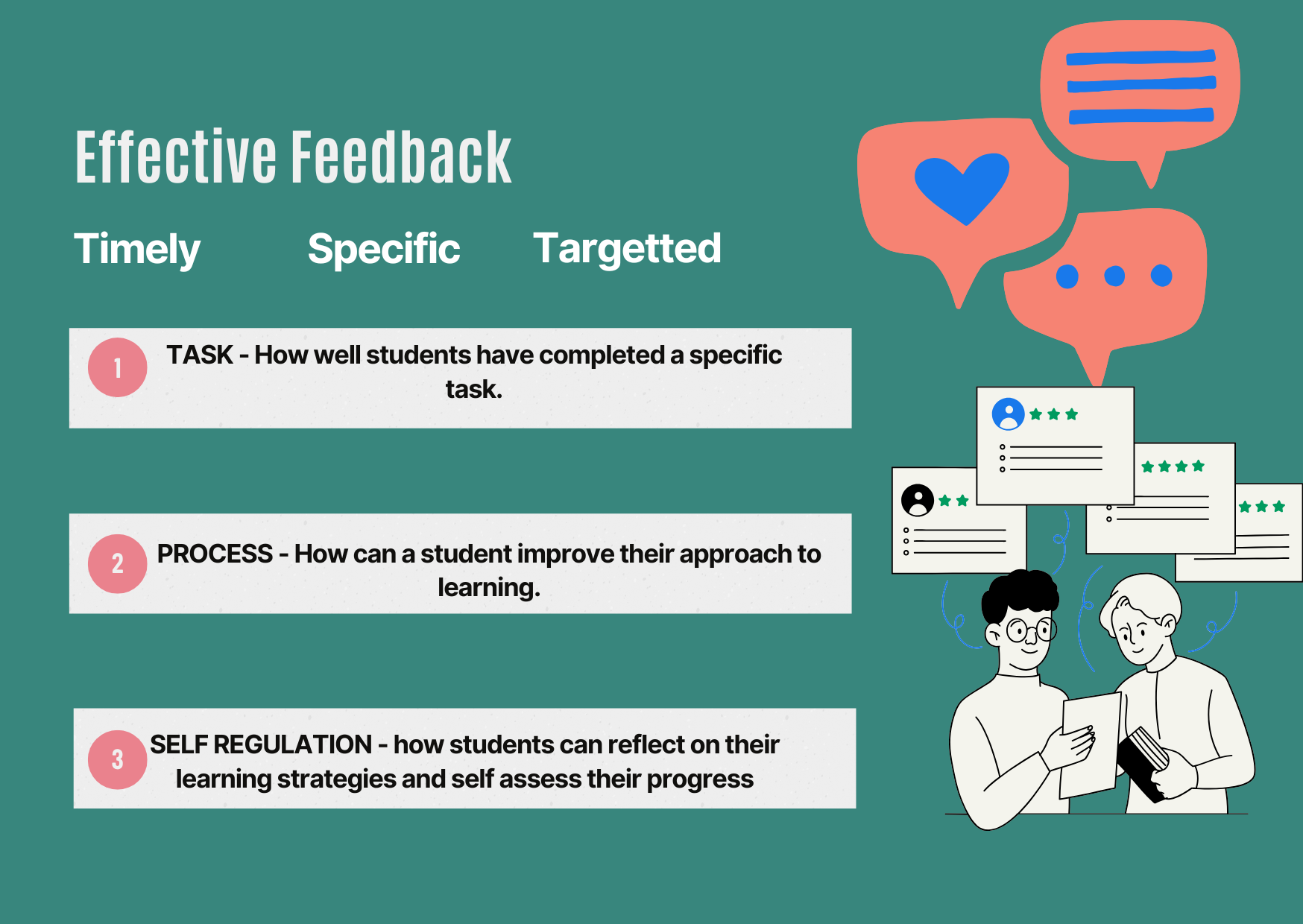
2. Listen to the audio clip. You may wish to view John Hattie's video on Types and Purposes of Feedback in the further reading section.
-
In this short micro learning activity you will reflect on the key principles of effective feedback using feedback you have given recently.
-
-
-
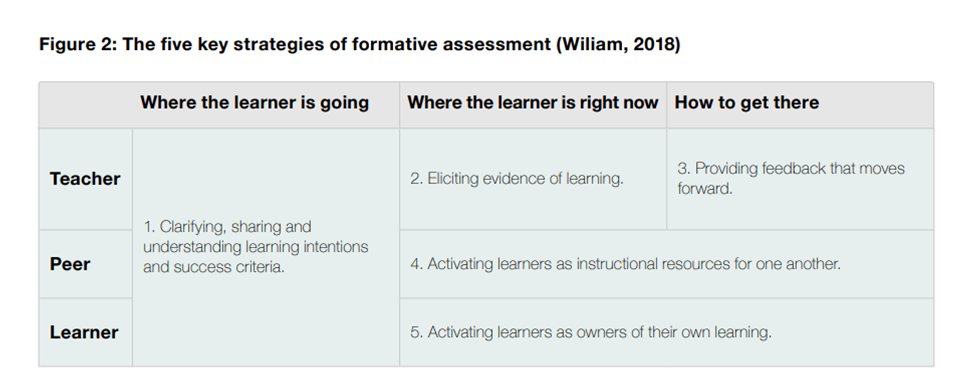
1. Listen to the audio which outlines 5 key strategies and the link between formative assessment and feedback.
2. Watch the clip of Dylan Wiliam explaining the importance of effective feedback in moving the learner forward.
3. Listen to the summary of the key recommendations from "Teacher Feedback to Improve Pupil Learning" by Education Endowment Foundation.

-
In this short micro learning activity you will reflect on how the key strategies can guide your current feedback practice.
-
Reflection Prompt: How does your approach to feedback promote a growth mindset in your students? What one change will you make to improve your feedback practice starting tomorrow?

-
-
-
Watch the presentation which gives practical tips, tools and strategies for effective feedback.
-
Choose one or 2 feedback strategies or tools from the presentation you would like to try or use more often in your classroom. Some suggested actvities are detailed in the micro learning activity .
-
Watch this clip which explains the use of Find and Fix -
-
-
-
-
Here are four professional enquiry tasks based on the principles of effective feedback, incorporating the detailed strategies and frameworks provided. You may wish to choose 2 to undertake. These enquiry tasks allow you to reflect on, experiment with, and refine your feedback approaches, while engaging students in the process for deeper learning.
-
Task 1: Reflecting on and Enhancing Feedback Practices
Objective: Assess current feedback practices and align them with research-backed strategies.
Activity:- Review a selection of feedback given to students over the past month (e.g., comments on written assignments, verbal feedback, peer assessments).
- Categorise the feedback using principles such as:
- Focus on actionable steps.
- Balance between positive reinforcement and constructive critique.
- Targeting the task/process/self-regulation levels (as per Hattie and Timperley).
- Identify patterns and gaps:
- Are feedback comments specific and actionable?
- How timely was the delivery?
- Does the feedback reinforce a growth mindset?
- Write a reflective journal summarising your findings and propose two actionable strategies to improve your feedback.
Outcome: Share your analysis in a department meeting, identifying strengths and areas for growth.
Task 2: Experimenting with Feedback Tools and Strategies
Objective: Test and evaluate different feedback delivery methods.
Activity:- Choose two feedback strategies to trial (e.g., “2 Stars and a Wish,” Traffic Light Highlighting, or Peer Feedback).
- Apply each strategy to a specific task or group of students, ensuring that feedback aligns with success criteria and learning intentions.
- Collect evidence of the impact by:
- Observing how students respond to the feedback (e.g., revisions made, questions asked).
- Using student self-assessment tools like rubrics or reflective questions (e.g., "What did you improve based on this feedback?").
- Reflect on the effectiveness of each method in terms of student engagement and improvement.
Outcome: Present your findings in a short report or infographic, outlining the benefits and limitations of each method.
Task 3: Co-Creating Success Criteria for Feedback
Objective: Engage students in defining and understanding effective feedback.
Activity:- Collaboratively design a success criteria checklist with your students for an upcoming project or assessment.
- Use reflective questions to involve students, such as "What makes feedback helpful for you?"
- Provide feedback on the task using the co-created criteria and encourage students to use it for self-assessment.
- Facilitate a follow-up discussion where students share how the feedback helped them improve their work.
- Reflect on whether involving students in this process improved their understanding of feedback and its impact on their learning.
Outcome: Summarise the process and its effects in a short blog post or presentation for as a record for yourself or colleagues.
Task 4: Developing Feedback Cycles for Growth
Objective: Create and monitor a feedback cycle to track and support student progress over time.
Activity:- Select a formative assessment task and provide students with scaffolded, actionable feedback using one or more methods (e.g., "Find and Fix" or “Even Better If”).
- Schedule a structured improvement session (e.g., “Improvement Time”) where students address feedback.
- Provide follow-up feedback on their revisions to reinforce progress and set next steps.
- Monitor students’ growth by revisiting the original feedback and measuring changes in performance or confidence.
Outcome: Create a case study documenting the entire feedback cycle, including student examples, reflections, and lessons learned.
- Review a selection of feedback given to students over the past month (e.g., comments on written assignments, verbal feedback, peer assessments).
-