Differentiation
Topic outline
-
-
Welcome. This micro course outlines the importance of differentiation in your classroom. You will be exposed to current strategies on how differentiation can be implemented or developed within your context.
Scotland’s schools are renowned for their commitment to providing a high-quality education for all students. To achieve this, differentiation plays a crucial role. In this short course, we’ll explore the concept of differentiation, why it’s vital in Scottish classrooms, and how teachers can effectively implement it to meet the diverse needs of their students. Discover practical strategies and real-world examples that demonstrate the positive impact of differentiation on student learning and outcomes.
-
A Rationale for Differentiation
-
-
-

Differentiation in the Classroom
-
Differentiation in Scottish Schools
-
Milestones to support learners with complex additional support needs:
Education Scotland has produced a set of milestones with accompanying guidance to specifically support learners with complex additional support needs. The aim of the milestones is to support practitioners to identify the progression of learning.
-
Planning for Multiple Levels
-
-
-

Micro Learning Activities on the Importance of Differentiation in Scottish Schools
Task 1:
- Scenario: You are a new teacher in a Scottish primary school. You have a class of 25 students with a wide range of abilities and learning styles. How would you differentiate your teaching to meet the needs of all your students?
Task 2:
- Scenario: You are a teacher in a Scottish secondary school. You are teaching a unit on the Scottish Enlightenment. How would you differentiate your instruction to meet the needs of students with different learning styles (visual, auditory, kinesthetic)?
Task 3:
- Scenario: You are a principal in a Scottish school. You want to create a culture of differentiation in your school. What steps would you take to achieve this goal?
Task 4:
- Scenario: You are a teacher in a Scottish school. You are using a differentiated approach in your classroom, but you are not seeing the results you expected. What might be some of the reasons for this? How can you address these issues?
Task 5:
- Scenario: You are a teacher in a Scottish school. You are planning a lesson on a challenging topic. How can you use technology to differentiate your instruction?
Additional Resources:
- Scottish Government:
https://education.gov.scot/ - Education Scotland:
https://education.gov.scot/ - Differentiation in the Scottish Curriculum:
https://education.gov.scot/media/feik0iry/differentiation-an-introduction.pptx
-
-
-
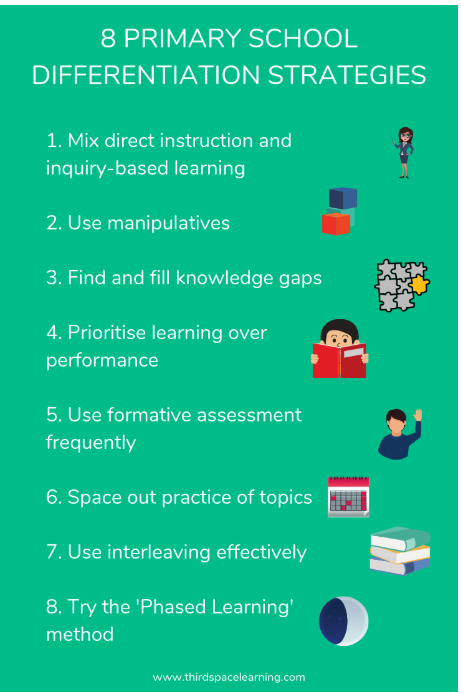
- Differentiation In The Classroom: The 8 Strategies That Will Support Every Pupil To Reach A Good Standard, Neil Almond
- Thinking Deeply about Primary Education Podcast - Episode 29 Differentiation...
- Adaptive Teaching or Differentiation, SecEd
- Flexible Grouping as a Differentiation Strategy, Dr Lori MacDonald
- Differentiation in Action - Braes High School
-
-

-
Differentiation is a key principle in the Scottish Curriculum, ensuring that all learners have the opportunity to achieve their full potential. Here are some ideas for professional enquiry focused on differentiation within this context:
1. Understanding Learners' Needs
- Assessment and Analysis: Explore different assessment strategies to identify learners' strengths, weaknesses, and learning styles. Analyse assessment data to inform differentiation.
- Individualised Learning Plans: Develop personalised learning plans for learners with diverse needs, including those with additional support needs.
- Universal Design for Learning (UDL): Investigate UDL principles and how they can be applied in the Scottish Curriculum to create inclusive learning environments.
2. Adapting Learning Experiences
- Flexible Grouping: Experiment with different grouping strategies, such as heterogeneous, homogeneous, and individual work, to cater to various learning needs.
- Tiered Activities: Create tiered assignments that offer varying levels of challenge to accommodate learners at different levels of understanding.
- Choice-Based Learning: Provide learners with choices in their learning activities to foster engagement and motivation.
3. Supporting All Learners
- Additional Support Needs (ASN): Explore strategies to support learners with ASN, including providing appropriate accommodations and modifications.
- Gifted and Talented Learners: Develop strategies to challenge and extend gifted and talented learners, ensuring they are not held back.
- English as an Additional Language (EAL): Investigate effective approaches to support EAL learners, such as providing language support and culturally relevant materials.
4. Effective Differentiation Practices
- Teacher Collaboration: Collaborate with colleagues to share best practices in differentiation and identify common challenges.
- Professional Development: Seek out professional development opportunities to enhance your knowledge and skills in differentiation.
- Evidence-Based Practice: Review research on effective differentiation strategies and implement them in your classroom.
-
Consider the following for Professional Enquiries:
- How can I effectively assess learners' needs to inform differentiation?
- What strategies can I use to create tiered activities that are both challenging and supportive?
- How can I support learners with ASN to participate fully in learning activities?
- What are the benefits of using choice-based learning in the Scottish Curriculum?
-
