Session 4 - Driving Data-Driven Results: Implementation Planning
Completion requirements
View

The Implementation Plan
"Our aim through this programme is to create a culture of curiosity around data, where practitioners at all levels are comfortable with and confident in exploring a range of data to inform improvement priorities and next steps for learners."
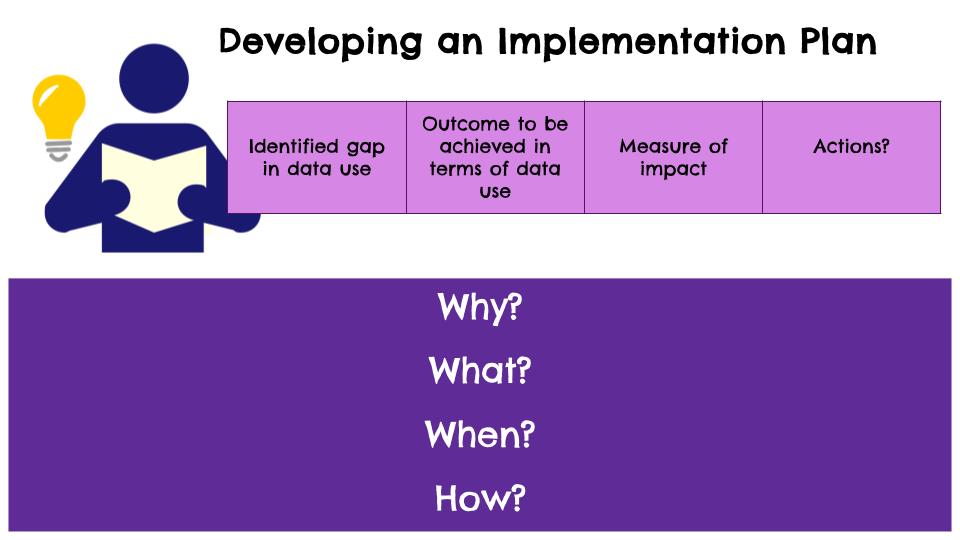
Section 1: Developing an Implementation Plan
Welcome! This section will guide you through the fundamentals of creating and using an effective implementation plan. As you can see from our opening statement, our aim is to foster a culture of data curiosity and confidence. An implementation plan is your roadmap to achieving this and other important goals.
Why Use an Implementation Plan?
Imagine setting out on a journey without a map or destination in mind. You might wander aimlessly, waste resources, and never reach your intended goal. Similarly, without an implementation plan, your efforts to improve and innovate can become scattered and ineffective. An implementation plan is crucial because it:
|
What is an Implementation Plan?
An implementation plan is a detailed, step-by-step guide that outlines how you will achieve a specific goal or objective. It typically includes:
In the context of our program, it helps us identify gaps in data use, define desired outcomes, and measure the impact of our efforts. |
When Should You Use an Implementation Plan?
An implementation plan is valuable in various situations, including:
|
How Do You Create and Use an Implementation Plan?
Creating an effective implementation plan involves several key steps:
|