Session 4 - Driving Data-Driven Results: Implementation Planning

Creating Your Implementation plan
Step 1: Identified gap in data use
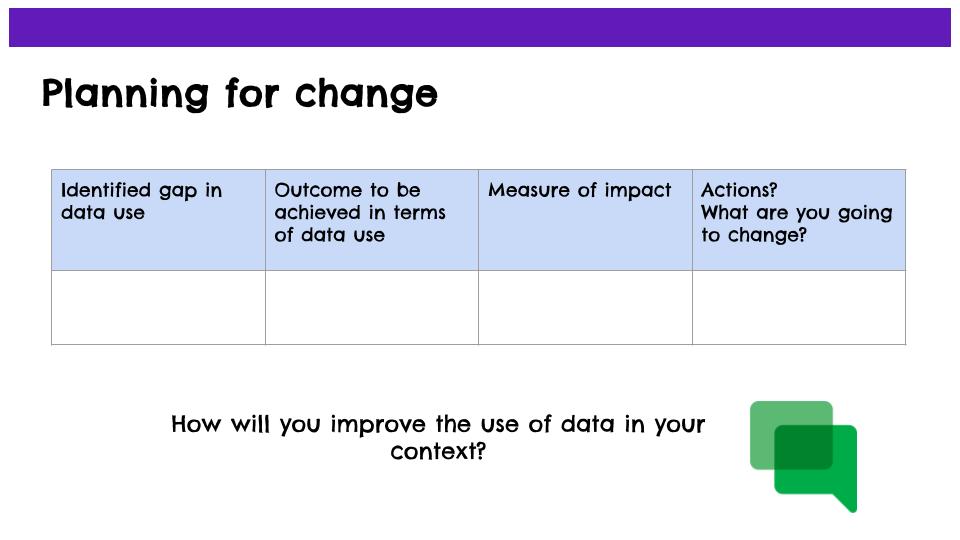
Step 1: Identified Gap in Data Usage
Welcome to the first step in creating your Data Champions implementation plan! This stage is all about pinpointing a specific area where your setting's use of data could be improved.
Take a close look at the image above. It's a simple framework, but it's the foundation for your plan. The first column, "Identified gap in data use," is where we'll focus now.
How Do You Identify a Gap?
There are several ways to uncover gaps in your current data practices:
- Data-Driven Dialogue: Have you recently engaged in a structured data-driven dialogue? These conversations can be incredibly insightful. If so, revisit your notes. Were there any recurring themes or concerns raised? Did any specific data points reveal a lack of understanding or utilization?
- Feedback: Consider feedback from teachers, staff, students, or even parents. Have they expressed any frustrations or confusion regarding data? Are there areas where they feel data is not being used effectively?
- Observations: Reflect on your own observations. Are there instances where data is collected but not analyzed? Are there missed opportunities to use data to inform decision-making?
- Review of Current Practices: Take a look at your current data collection, analysis, and reporting processes. Are there any bottlenecks or inefficiencies? Are there specific types of data that are consistently overlooked?
What Exactly is the Gap?
Once you've identified a potential gap, it's crucial to be specific. Avoid vague statements like "We don't use data enough." Instead, aim for concrete descriptions. For example:
- "Teachers are not consistently using student assessment data to differentiate instruction."
- "We lack a clear system for tracking and analyzing student attendance data."
- "Parents are not receiving timely and relevant information about their child's progress based on data."
- "We are not effectively using student feedback surveys to inform school improvement efforts."
Being Specific is Key
The more specific you are in defining the gap, the more targeted and effective your implementation plan will be. Think of it like this: if you're trying to fix a leaky faucet, you need to know exactly where the leak is coming from.
Take some time now to reflect on your setting's data practices. Use the prompts above to guide your thinking. Write down the specific gap you've identified in the first column of the framework.
This focused approach will set you up for success in the following steps of your implementation plan.